- drmanish@mayomhospital.com
- +91 9999469769 , 01244111880
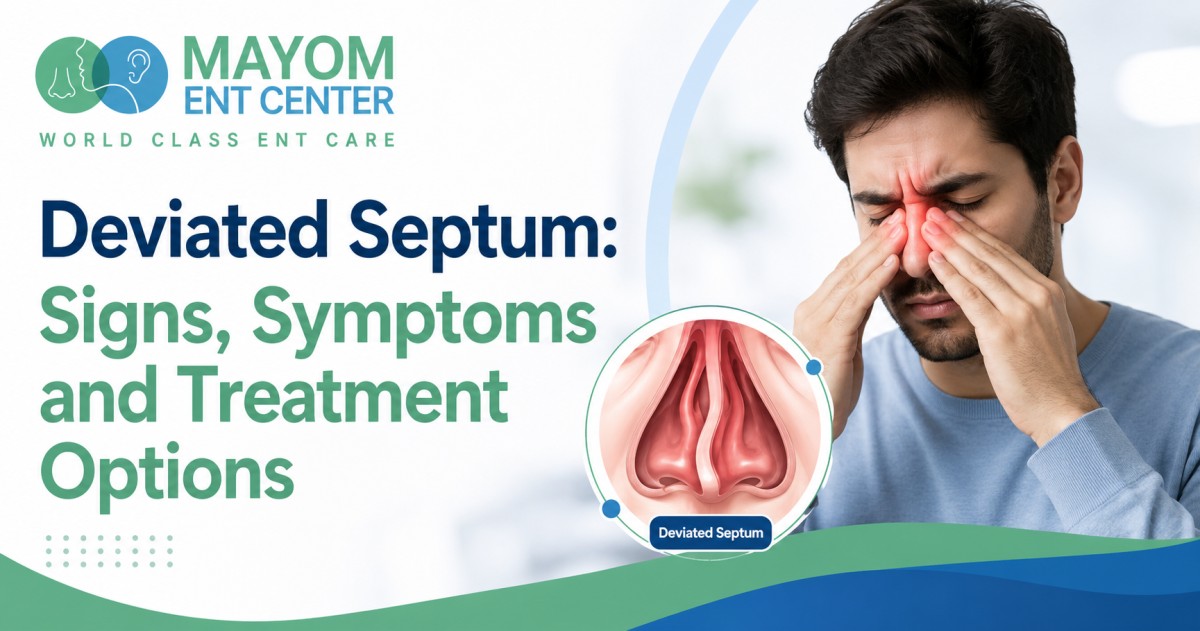
One side of your nose always feels blocked. You breathe through your mouth at night. Maybe you wake up with a dry throat and wonder why one nostril seems to have taken the day off.
It could be a deviated septum.
The nasal septum is the thin wall separating the two nasal passages. Ideally, it sits roughly in the centre. In reality, plenty of people have some degree of deviation—sometimes from birth, sometimes after an old injury that happened years ago and was almost forgotten. The problem begins when that bend becomes significant enough to interfere with breathing or drainage.
That’s when an assessment by an experienced ENT specialist matters.
A deviated septum occurs when the cartilage or bone dividing the nose shifts away from the centre. A mild deviation may cause no symptoms at all. A more pronounced one can narrow one nasal passage, making normal breathing surprisingly difficult.
And here's the frustrating part: you may have adapted to it so completely that you don't realise your breathing isn't normal.
You simply think, “I’ve always been like this.”
The symptoms can vary from person to person, but several complaints appear repeatedly in ENT GURGAON clinics.
One nostril may feel blocked more often than the other. During a cold or allergy flare-up, that narrow passage can become even harder to breathe through.
Exercise can make the problem obvious. You may find yourself breathing through your mouth because your nose simply isn't moving enough air.
A severely deviated septum can interfere with normal mucus drainage, which may contribute to recurring sinus symptoms in some people. It isn't the only cause of sinusitis, though—and that distinction matters when deciding on treatment.
Poor nasal airflow can encourage mouth breathing at night. The result? Snoring, dry mouth and, in some cases, disrupted sleep.
When airflow becomes uneven, the nasal lining can dry out or become irritated, potentially increasing the tendency for nosebleeds.
A deviated septum doesn't automatically mean every headache is caused by your nose. Still, significant obstruction combined with sinus inflammation can contribute to facial pressure and discomfort.
Some people are born with a crooked septum. Others develop one after a sports injury, fall, accident, or even an old childhood bump that seemed insignificant at the time.
Age can also play a role. The structures inside the nose change gradually, and symptoms that were barely noticeable at 20 may become much more obvious later.
Medication can't physically straighten cartilage or bone.
But it can control symptoms.
If allergies, inflammation, or sinus disease are making breathing worse, an ENT doctor may recommend saline rinses, nasal corticosteroid sprays, antihistamines or other appropriate treatments. For some patients, that is enough. Surgery isn't automatically the answer.
When structural blockage remains severe despite medical treatment, however, surgery may be considered.
Septoplasty is performed to straighten the deviated portion of the nasal septum and improve airflow. The goal isn't simply to make the nose look straighter. It's functional—helping the patient breathe more comfortably.
If significant sinus disease exists alongside the septal deviation, additional treatment may sometimes be required.
For chronic sinus disease that doesn't respond adequately to medical treatment, Endoscopic Sinus Surgery treatment in Gurgaon may be considered. Using a small camera through the nostrils, the surgeon can access blocked sinus passages without making external facial incisions.
In complex sinus cases, previous surgery, extensive inflammation, or disease located close to important structures, Navigation Sinus Surgery in Gurgaon can provide image-guided assistance during the procedure. It works somewhat like a surgical GPS, helping the surgeon understand the precise anatomy while operating.
The right procedure depends on the actual problem—not simply the presence of a deviated septum.
Don't keep accepting poor nasal breathing as “normal” if it affects your sleep, exercise, concentration or quality of life.
An experienced Sinus Surgery doctor in Gurgaon, such as Dr Manish Prakash, can evaluate the nasal passage, assess the septum and determine whether symptoms are coming from structural blockage, allergies, sinus disease, or a combination of factors.
A crooked septum doesn't always need fixing.
But when it keeps getting in the way of breathing, sleeping and living comfortably, ignoring it isn't exactly a winning strategy.